Facility PlanningPlan The Work Around Access And Downtime
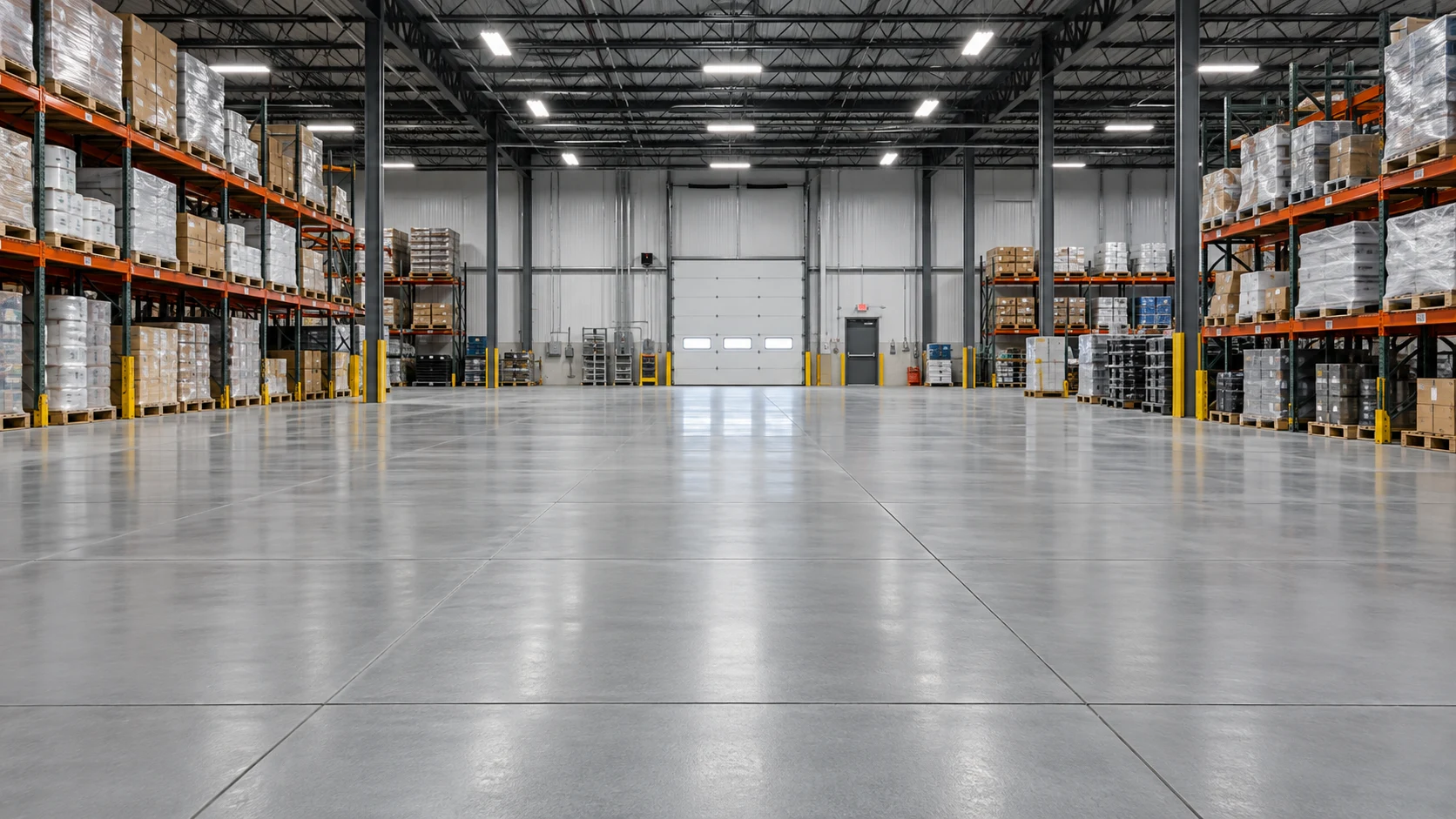
Before scheduling, identify what can be moved, which aisles need to remain available, and when the floor must return to use. Larger projects may allow work in sections, but that depends on the layout, preparation requirements, ventilation, and coating system.
A floor that can accept foot traffic may still need more cure time before forklifts, loaded carts, or chemical exposure. We discuss those stages during the evaluation so the reopening plan fits the products proposed for your facility.
Tell us the approximate square footage, facility location, current floor condition, and your operating schedule. Photos and any records of previous coatings help us prepare for the visit.
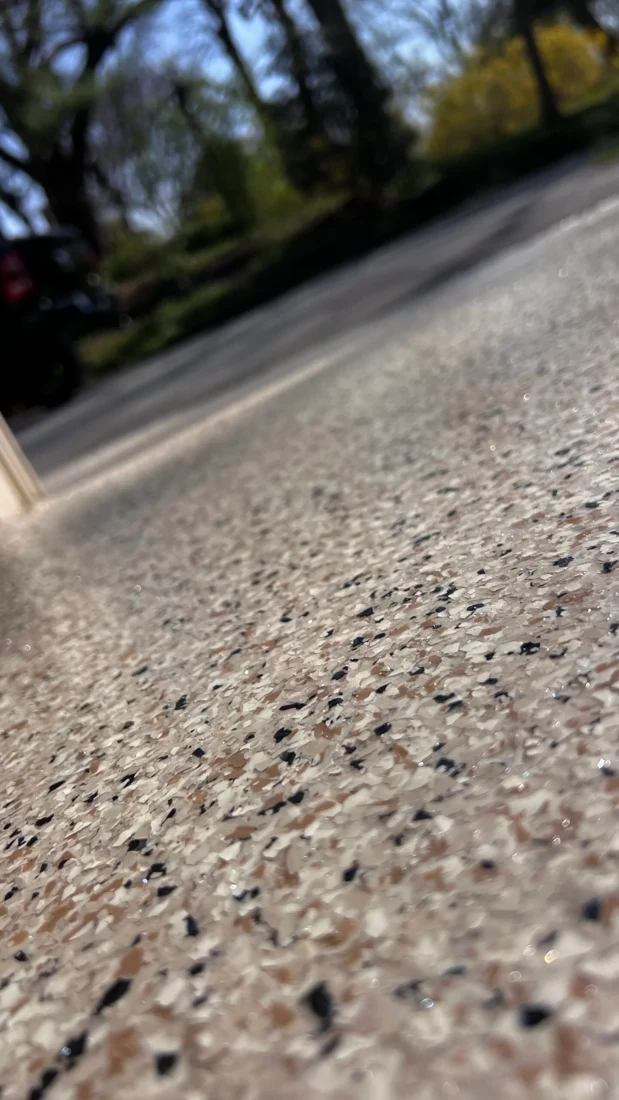
Texture also affects maintenance. Our guide to slip resistance and cleanability explains the balance between traction and practical cleanup.
Care For The Floor After Restoration
A renewed surface needs a cleaning routine suited to its coating and texture.
- Remove dry grit regularly so it is not ground into the finish.
- Clean spills promptly using the coating manufacturer's approved method.
- Use compatible cleaners at the recommended dilution and test unfamiliar products.
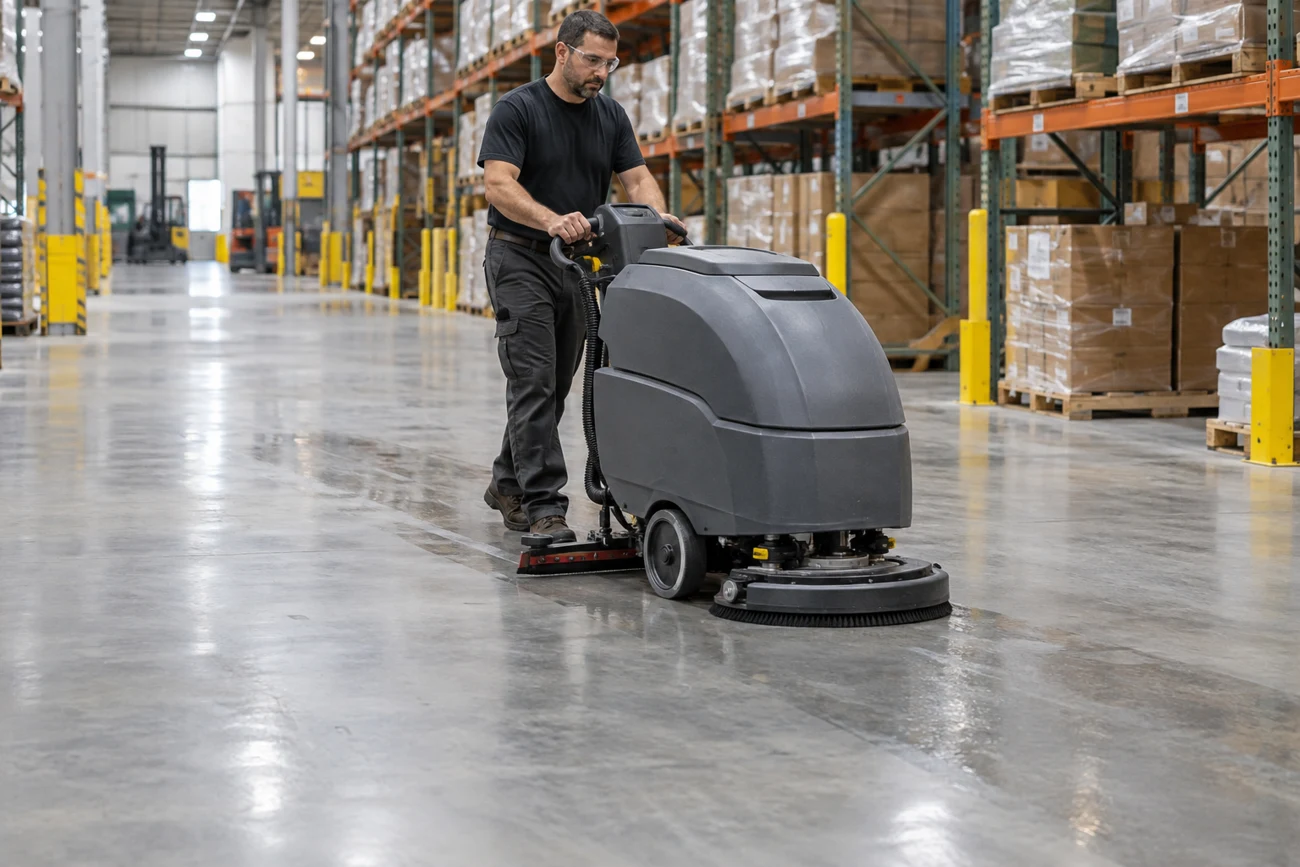
- Use suitable scrubber brushes or pads, then recover dirty solution and rinse as directed.
- Check traffic lanes, joints, and damaged areas so wear can be addressed before it spreads.
Wax, polish, aggressive pads, and harsh chemicals should only be used when approved for the installed surface. Keep the product and care information with your facility maintenance records.