Epoxy Flake Floor Coatings Built for Real Use
Decorative vinyl flake gives concrete a clean, finished appearance while adding texture and helping disguise dust, scuffs, and everyday wear. Louisville Coating Company installs professional flake floor systems for garages, basements, workshops, utility spaces, and commercial floors.
What is an epoxy flake floor?
An epoxy flake floor is a layered concrete coating system. A pigmented resin base coat is applied to prepared concrete, decorative vinyl chips are broadcast into the wet coating, and a clear topcoat seals the surface. The result is a durable floor with visible color variation and more texture than a smooth, solid-color coating.
The term “epoxy flake floor” describes the finish customers recognize. Depending on the slab, sunlight, cure-time needs, and how the space will be used, the full system may use epoxy, polyaspartic, or compatible materials in different layers. The right specification matters more than the label on a one-part kit.
See how flake fits alongside Louisville Coating Company's other epoxy and concrete coating systems.
What are the benefits of a flake floor coating?
A flake coating is popular because it balances appearance, texture, protection, and practical maintenance. The exact performance depends on concrete preparation, the resin system, topcoat, environment, and normal care.
Helps Hide Daily Wear
Multi-color chip patterns make dust, small scuffs, and minor surface variation less noticeable than they would be on a single solid color.
Adds Practical Texture
The flake profile creates more surface texture than a smooth coating. Additional traction media can be specified when the space needs more grip.
Resists Common Spills
A properly selected topcoat helps protect against many automotive fluids, household spills, cleaners, stains, and routine abrasion.
Makes Cleanup Easier
Dirt and liquid stay at the coated surface instead of soaking directly into bare concrete, so routine sweeping and mopping take less work.
Offers Flexible Color Blends
Gray, charcoal, tan, greige, black-and-white, and custom blends can coordinate with cabinets, walls, vehicles, branding, or the rest of the property.
Works in Many Spaces
Flake systems can be specified for residential garages, basements, workshops, utility rooms, retail areas, service spaces, and light commercial use.
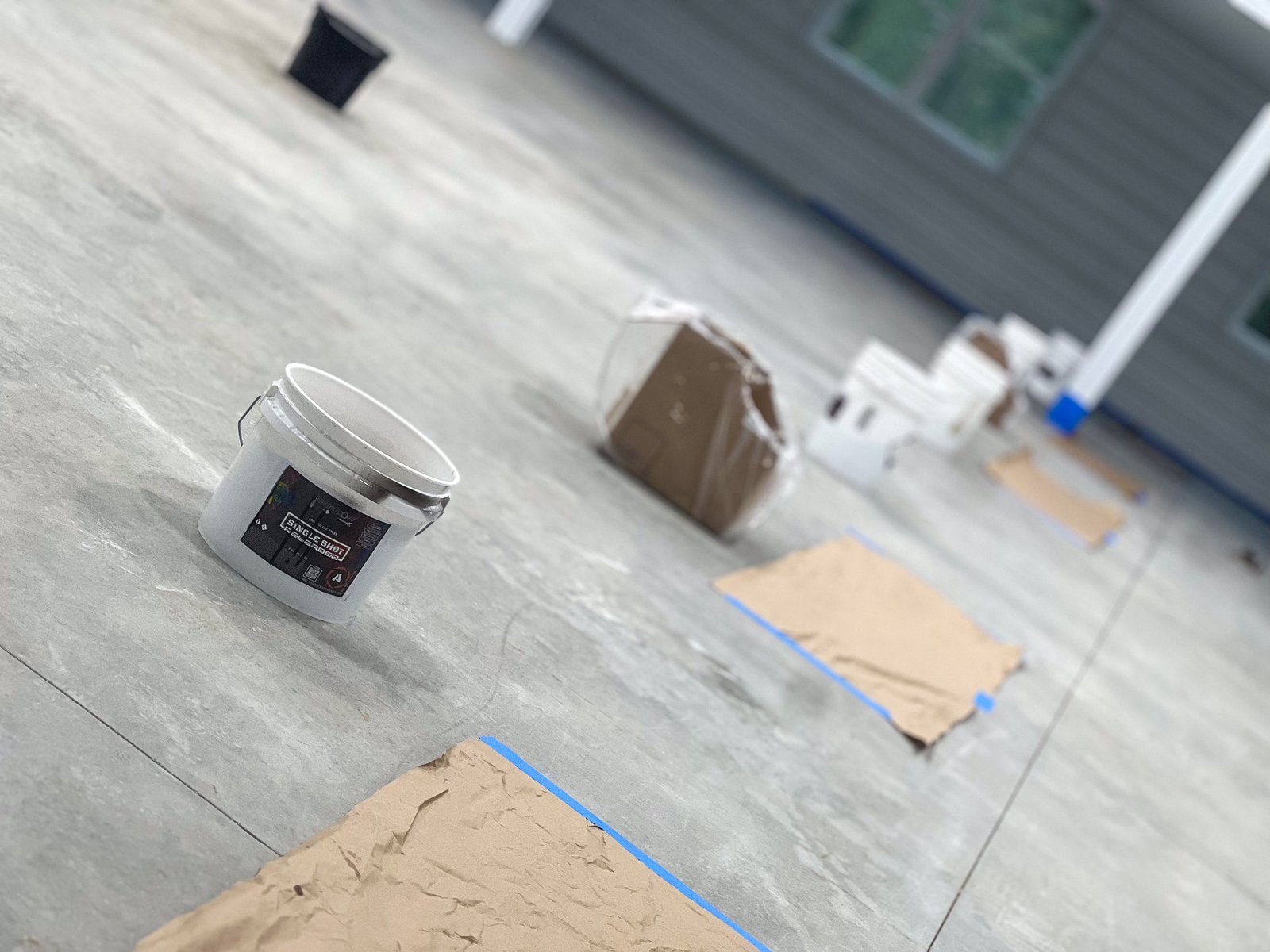
A professionally installed coating starts with the condition of the concrete, not the color selected for the top.
Why does surface preparation matter?
Flake cannot compensate for poor adhesion underneath it. Coating failures often begin when an installer skips mechanical preparation, coats over contamination, ignores moisture, or uses the wrong product for the environment.
Louisville Coating Company diamond-grinds the concrete, addresses cracks and surface damage, and evaluates the slab before applying the coating system. That preparation creates the surface profile needed for a reliable bond.
- Existing coating, sealer, and contamination are evaluated.
- The slab is mechanically prepared with diamond grinding.
- Cracks, pits, and damaged areas are addressed before coating.
- Moisture conditions are considered when specifying the system.
- The base coat and topcoat are matched to the space and use.
View recent coating projects in the Louisville Coating gallery.
How is an epoxy flake floor installed?
A professional flake floor is a coordinated system, not loose chips sprinkled over floor paint. Product choice and cure times vary, but a typical installation follows these stages.
Site Visit and Slab Assessment
The space, concrete condition, previous treatments, traffic, sunlight, moisture concerns, cleaning needs, and desired finish are reviewed before the system is priced.
Diamond Grinding and Cleaning
Mechanical grinding removes weak surface material and creates the concrete profile the coating needs. Dust and debris are removed before repairs or coating begin.
Concrete Repair
Cracks, pits, spalls, and other defects are addressed as the slab allows. Concrete can continue to move, so repair reduces visible defects but cannot guarantee a slab will never crack again.
Pigmented Base Coat
A compatible resin base coat is applied at the coverage and thickness required by the selected system. Its color supports the chosen flake blend.
Vinyl Flake Broadcast
Decorative chips are broadcast into the wet base coat. A full broadcast uses enough flake to cover the visible base and create an even, dense chip pattern.
Scrape, Vacuum, and Detail
After the base cures, loose flakes are removed and the floor is scraped to control texture. Edges, corners, steps, and transitions are cleaned and detailed.
Clear Protective Topcoat
A clear topcoat locks in the decorative layer and provides the final wear surface. Gloss, texture, UV exposure, chemical exposure, and return-to-service time guide the topcoat selection.
What is the difference between full-broadcast and light-broadcast flake?
| Feature | Full-Broadcast Flake | Light or Partial Broadcast |
|---|---|---|
| Flake coverage | Dense chip coverage across the visible floor | Individual chips remain separated and the base color stays visible |
| Appearance | Consistent, stone-like blend with more visual variation | Simpler speckled look with stronger emphasis on the base color |
| Surface variation | Better at disguising minor visual variation and everyday debris | Less visual camouflage because more base coat is exposed |
| Typical decision | Often selected for garages, workshops, and higher-use spaces | Chosen when the customer prefers a lighter decorative effect |
Flake quantity is only one part of the system. Concrete preparation, base-coat adhesion, topcoat selection, and installation quality have a larger effect on long-term performance.
Where does flake flooring work best?
Garages
Flake is a practical garage finish because it hides ordinary debris, is easier to clean than bare concrete, and can be paired with a topcoat selected for vehicle traffic and automotive exposure.
Basements and Utility Rooms
A coated floor brightens unfinished concrete and makes routine cleanup easier. The slab must still be evaluated for moisture before coating because a decorative coating is not a substitute for waterproofing or drainage repair.
Workshops and Service Areas
Flake systems can handle busy work areas when the base, build, and topcoat are selected for rolling loads, abrasion, dropped tools, and expected chemical contact.
Retail and Showroom Floors
Decorative blends give customer-facing spaces a finished appearance without the pronounced movement and marbling of metallic epoxy.
Commercial Back-of-House Areas
Cleaning needs, traction, sanitation requirements, chemicals, traffic, and downtime should all be reviewed before a commercial floor system is specified.
Covered and Sun-Exposed Areas
Direct UV exposure changes material requirements. Exterior or sun-exposed concrete needs a color-stable flake and weather-resistant coating system designed for those conditions.
How do you choose a flake blend?
Start with the colors already in the space, then consider how much dirt, dust, road salt, or daily wear the floor will see. Mid-tone multi-color blends often disguise ordinary debris better than very dark, very light, or nearly solid blends.
- Gray and charcoal for clean, modern garages and shops
- Tan, brown, and greige for warmer interiors
- Black, white, and gray blends for higher contrast
- Brand-coordinated mixes for commercial spaces
- Different flake sizes for a finer or more pronounced pattern
Choose the final blend from a physical sample whenever possible. Screen and printer settings can shift color. Decorative flake manufacturers also offer multiple size profiles and outdoor-rated options. See Torginol's decorative materials for an example of the range available in the industry.
How do you care for an epoxy flake floor?
Routine care is straightforward. Remove grit before it becomes abrasive, clean spills promptly, and use a neutral cleaner with a soft mop or non-abrasive brush. Avoid dragging sharp metal across the floor. Place mats where sand, road salt, or water collects, but do not use rubber-backed mats unless the coating manufacturer confirms compatibility.
Damage, unusual staining, loss of gloss, or a change in surface texture should be inspected before it spreads. For broader maintenance questions, visit the Louisville Coating Company FAQ.
Epoxy flake floor FAQs
Are epoxy flakes made of metal?
No. Standard decorative floor flakes are colored vinyl chips, not metal particles. They create a speckled or stone-like pattern. Metallic epoxy uses reflective pigment in the resin and is a different finish.
Is a flake floor slippery?
Flake adds texture compared with a smooth coating, but no coated floor is slip-proof. Water, oil, soap, and loose debris can still reduce traction. Additional texture can be included based on the area and how it will be used.
Will a flake coating hide cracks in concrete?
It can make minor color variation and small surface marks less noticeable, but it does not stop structural movement. Existing cracks should be evaluated and repaired before coating, and concrete may crack again as the slab moves.
Can an epoxy flake floor go in a basement?
Yes, if the slab and moisture conditions are suitable for the selected system. A coating can make basement concrete easier to clean, but it is not a substitute for fixing active water intrusion, drainage problems, or excessive moisture vapor.
Can flake flooring be used outside?
Only when every layer is specified for exterior exposure. Direct sunlight and weather require UV-stable flakes plus a color-stable, weather-resistant coating system. Standard interior epoxy should not be assumed suitable outdoors.
How long does installation take?
Many residential floors are completed in one to two days, but the schedule depends on repairs, moisture, temperature, product choice, number of layers, and cure requirements. Louisville Coating Company confirms foot-traffic and vehicle-traffic times for the exact system installed.
How long does an epoxy flake floor last?
There is no honest fixed lifespan for every floor. Longevity depends on concrete condition, preparation, moisture, product system, UV exposure, traffic, chemicals, cleaning, and maintenance. Professional preparation and a properly specified topcoat are the foundation of long-term performance.
What is the difference between epoxy and polyaspartic flake floors?
Epoxy typically provides longer working time and is commonly used as a base or build coat. Polyaspartic coatings cure faster and can offer strong UV and abrasion performance. Many professional flake floors combine materials by using the product best suited to each layer.
Epoxy flake floor installation across Louisville and Southern Indiana
Louisville Coating Company is based in Shepherdsville and serves residential and commercial customers throughout the Louisville region. John Booth brings more than 20 years of flooring experience to the preparation and installation behind every coating project.
- Louisville, KY
- Shepherdsville, KY
- Elizabethtown, KY
- Clarksville, IN
- New Albany, IN
- View Full Service Area
Page reviewed and updated August 25, 2026. The previous metallic-floor language was replaced with information specific to decorative vinyl flake coating systems.
Get a clear recommendation for your concrete floor
Louisville Coating Company will inspect the space, explain the prep, help you choose a flake blend, and quote the system your floor actually needs.
