IN THIS GUIDE Jump to an answer
Why Concrete Prep Makes Or Breaks Your Floor
A sharp epoxy or polyaspartic floor does not start with the shine. It starts with the concrete underneath, the part most people never see until something goes wrong.
A floor coating can look incredible on day one and still fail if the surface underneath was rushed, skipped, or barely cleaned. That is where concrete prep earns its keep.
The coating system still matters. The design matters. The topcoat matters. But if the slab is not prepared correctly, the whole floor is fighting uphill from the start.
Concrete Prep Is The Foundation Of A Better Floor Coating
Concrete may look clean, but that does not mean it is ready for epoxy or polyaspartic. A slab can hold dust, old sealer, oil, moisture, paint, weak concrete, and surface contaminants that block adhesion.
Professional concrete prep creates the right surface for the coating to bond, cure, and perform. The International Concrete Repair Institute’s surface-preparation guidance explains why the condition and profile of the concrete affect coating performance. Without proper prep, even a good product can struggle.
- Stronger adhesion between the slab and coating system
- Better surface profile for epoxy and polyaspartic coatings
- Cleaner finished appearance
- Fewer peeling, bubbling, and lifting issues
- Better long-term durability in garages and commercial spaces
Why Diamond Grinding Matters Before Epoxy Or Polyaspartic
Diamond grinding is one of the biggest differences between a professional garage floor coating and a quick roll-on kit. It mechanically opens the concrete surface so the coating can grab correctly.
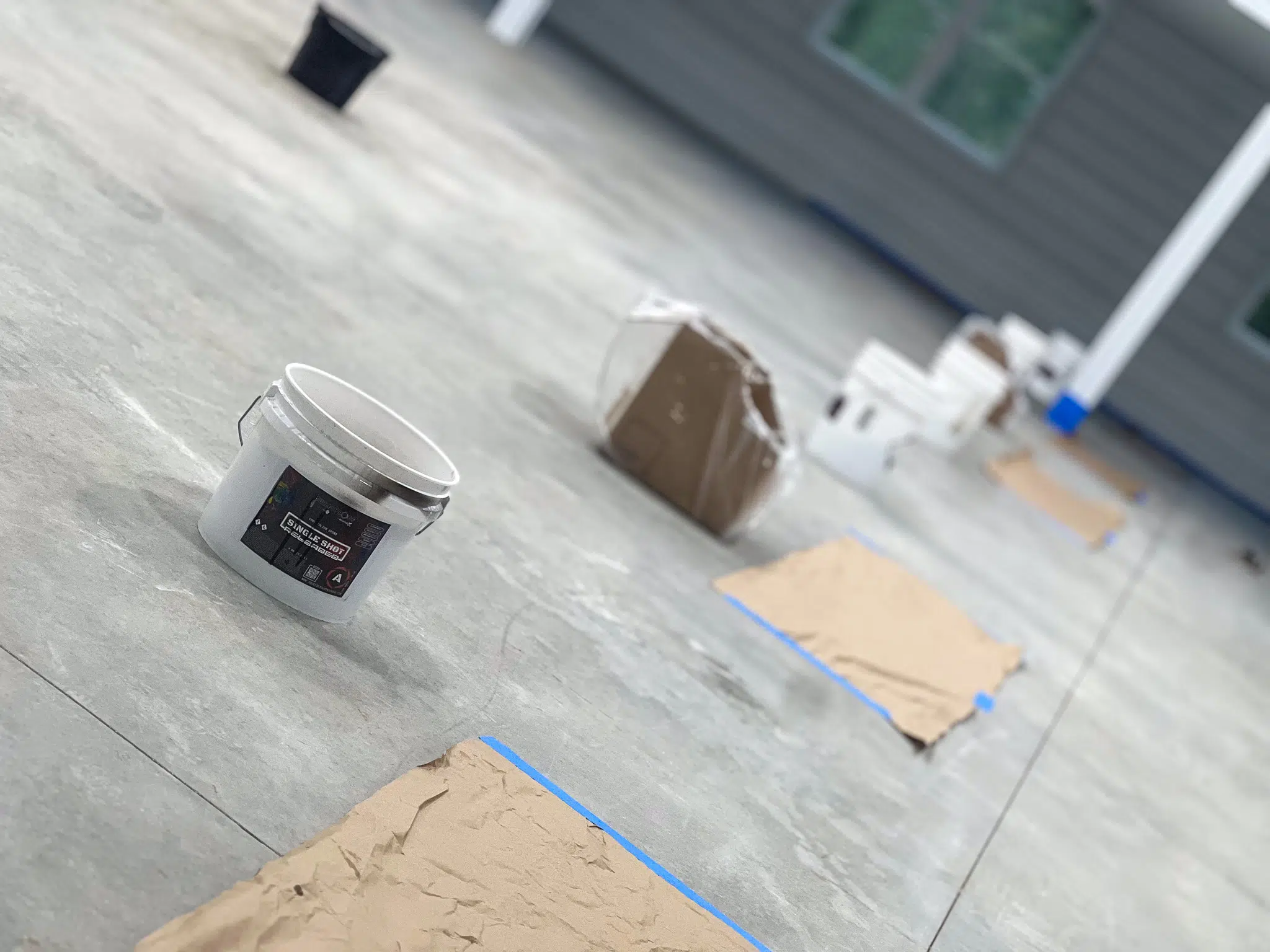 Surface Prep
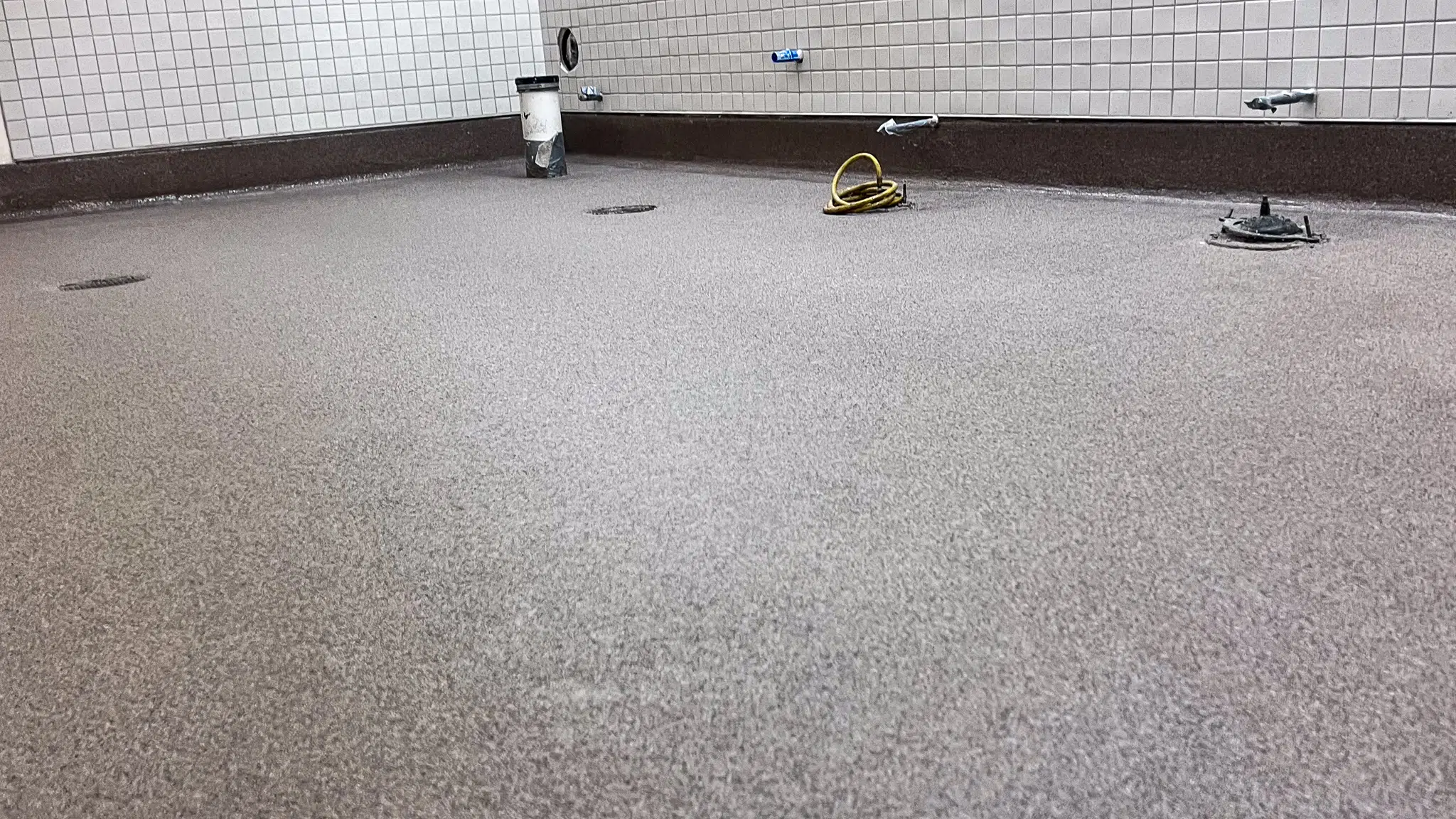 Finished Floor
- Removes old coatings, failed epoxy, paint, and sealers
- Cuts through weak surface material
- Creates a consistent concrete surface profile
- Helps the base coat bond instead of sitting on top
- Prepares the slab for a cleaner, stronger finished floor
That is where cheap coatings usually lose. The concrete may look ready, but the coating has nothing solid to bite into. See more Louisville Coating project photos to compare properly installed finished floors.
Surface Profile Helps The Coating Bond Correctly
Concrete surface profile is the texture created during prep. If the slab is too smooth, the coating may sit on top instead of locking into the concrete.
If the surface is unevenly prepared, some areas may bond better than others. That can lead to peeling, lifting, soft spots, or early wear, especially in garages where hot tires, road salt, humidity, and daily traffic all beat on the floor. Our garage floor coating process is built around those real conditions.
Cracks, Pitting, And Spalling Need Attention First
Concrete damage does not disappear because a coating goes over it. Cracks, pits, chips, and spalling should be addressed before the base coat is installed.
- Hairline cracks can telegraph through the finished floor
- Pitted concrete can create rough, uneven areas
- Spalling can leave the coating bonded to weak material
- Old coating damage can affect the final look and strength
The goal is not to pretend every slab is brand new. The goal is to build the best possible surface for the coating system going over it.
Moisture Problems Can Cause Floor Coatings To Peel Or Bubble
Moisture is one of the biggest enemies of floor coatings. Concrete can hold moisture inside the slab, and moisture vapor can move through the concrete from underneath. The American Concrete Institute’s guide for slabs receiving moisture-sensitive flooring covers concrete moisture behavior, testing, preparation, repairs, and mitigation.
- Bubbling or blistering
- Peeling or lifting
- Cloudy or hazy spots
- Weak bond between the concrete and coating
- Soft or failing areas in the finish
Louisville weather brings humidity, rain, temperature swings, and freeze-thaw conditions. A slab can look dry on the surface and still have moisture concerns below.
Garage And Commercial Floor Coatings Need Real Prep
Garage floors deal with vehicles, hot tires, tools, water, salt, oil, lawn equipment, and daily wear. Commercial floor coatings have even less room for shortcuts.
Grind
The concrete is mechanically profiled so the coating can bond correctly.
Repair
Cracks, pits, spalling, and surface damage are addressed before coating.
Coat
The right epoxy, polyaspartic, flake, metallic, or topcoat system is installed for the space.
Prep Sets The Foundation, But The Whole System Matters
Concrete prep is the foundation, but it is not the whole floor. The coating system still has to be right. The design still has to be clean. The topcoat still has to protect the surface. If you are comparing finishes, start with our guide to the different types of epoxy floors.
- Proper concrete grinding
- Clean crack and surface repair
- The right coating system for the space
- Even flake broadcast or clean metallic movement
- Correct cure time
- Durable topcoat protection
- Sharp installation details from start to finish
Why DIY Epoxy Kits And Cheap Coatings Fail Early
Most failed floor coatings fail for a reason. Usually, the concrete was not prepared correctly, the wrong product was used, or the installation was rushed. A professional epoxy and concrete coating system should be selected for the slab, the traffic, the exposure, and the way the space will actually be used.
- No diamond grinding
- Coating over old sealer
- Ignoring cracks, pits, and weak concrete
- Moisture problems under the coating
- Thin coating products
- Weak topcoats
- Uneven flake broadcast
- Not enough cure time
Concrete Prep And Floor Coating FAQs
Is Diamond Grinding Better Than Acid Etching?
Yes, for professional floor coating work, diamond grinding is usually the better prep method. It creates a more consistent surface profile and removes old coatings, sealers, and weak concrete more effectively. You can see where grinding fits into the full garage floor coating installation process.
Can You Coat Over Cracked Concrete?
Concrete can often be coated after cracks are repaired. The cracks should be evaluated and filled before the coating system is installed so the floor has a cleaner, stronger surface.
Why Do Epoxy Floors Peel?
Epoxy floors usually peel because of poor prep, moisture problems, old sealers, contamination, weak concrete, or the wrong coating system for the space.
Does The Topcoat Matter?
Yes. Prep is the foundation, but the topcoat protects the finished floor. A strong coating system needs proper prep, a good base coat, clean design work, and the right protective topcoat. For demanding spaces, learn how BallistiX floor coatings add high-performance surface protection.
Get A Floor Built From The Concrete Up
Planning a garage floor coating, commercial floor coating, flake floor, metallic epoxy floor, or polyaspartic coating project? Louisville Coating Company can inspect the slab, explain the options, and install a system that fits the space. We serve Louisville, Shepherdsville, and communities across our Kentucky and Southern Indiana service area.
Schedule A Floor Coating Estimate View Louisville Coating On GoogleEvery durable floor starts with the actual concrete.
Louisville Coating Company provides on-site estimates so the recommendation fits the slab, exposure, traffic, and finish you actually need.
